Weatherboard, plaster and brick each need a different repaint. Timber weatherboards need sanding, priming of bare wood and paint that can move with the timber. Plaster needs cracks repaired and a paint that lets the wall breathe. Brick usually needs only a clean, and painting it is a long-term choice, because once painted it has to be repainted for good. Most North Shore streets have all three, from weatherboard villas in Devonport to plaster and brick homes in Albany and Glenfield. This page explains how painters prepare each one. For the full job, see exterior house painting on the North Shore.
Weatherboard
Timber boards, often on villas and bungalows. Sanded, bare wood primed, rot repaired, two coats. Lead paint is likely on pre-1980s homes.
Plaster
Solid plaster and newer plaster systems. Cracks raked out and filled, then a paint made for masonry or the plaster system.
Brick
Clay brick, usually left natural. A wash is often all it needs. Painting it is possible, but it is then a surface you keep painting.
Painting weatherboards
Wash the boards, scrape and sand back to firm paint, cut out and replace any rot, fill gaps, prime bare timber, then put on two coats of an exterior paint made for timber. Resene's systems for exterior timber start with a primer or sealer on bare wood. The lap edges and board ends, where water sits, need the most care.
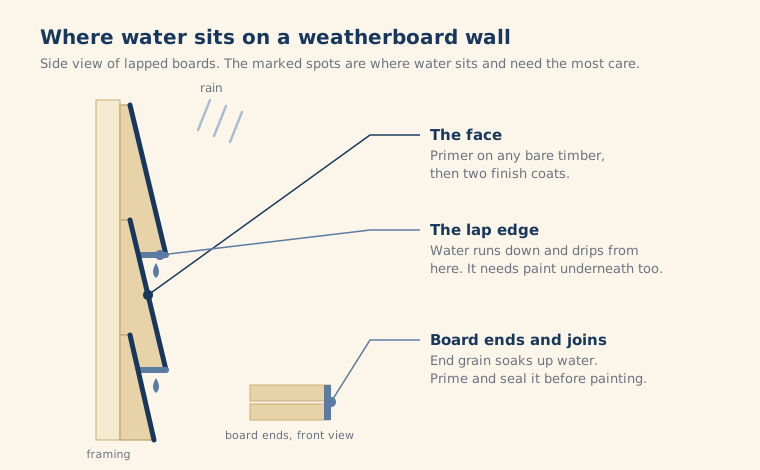
On villas and bungalows built before the 1980s, Health New Zealand advises presuming lead in the old paint. BRANZ advises against power sanding, water blasting and open flames on lead paint, so the weatherboards are prepared by hand with wet methods and the debris is contained.
Priming weatherboards
You need to prime any bare timber, new boards, replaced sections and new filler. Sound old paint that has been cleaned and sanded usually doesn't need a full primer coat, only spot priming where the timber shows. Primer seals the wood and helps the topcoat stick. Skipping it on bare timber is one of the main reasons paint peels early.
Painting cedar weatherboards
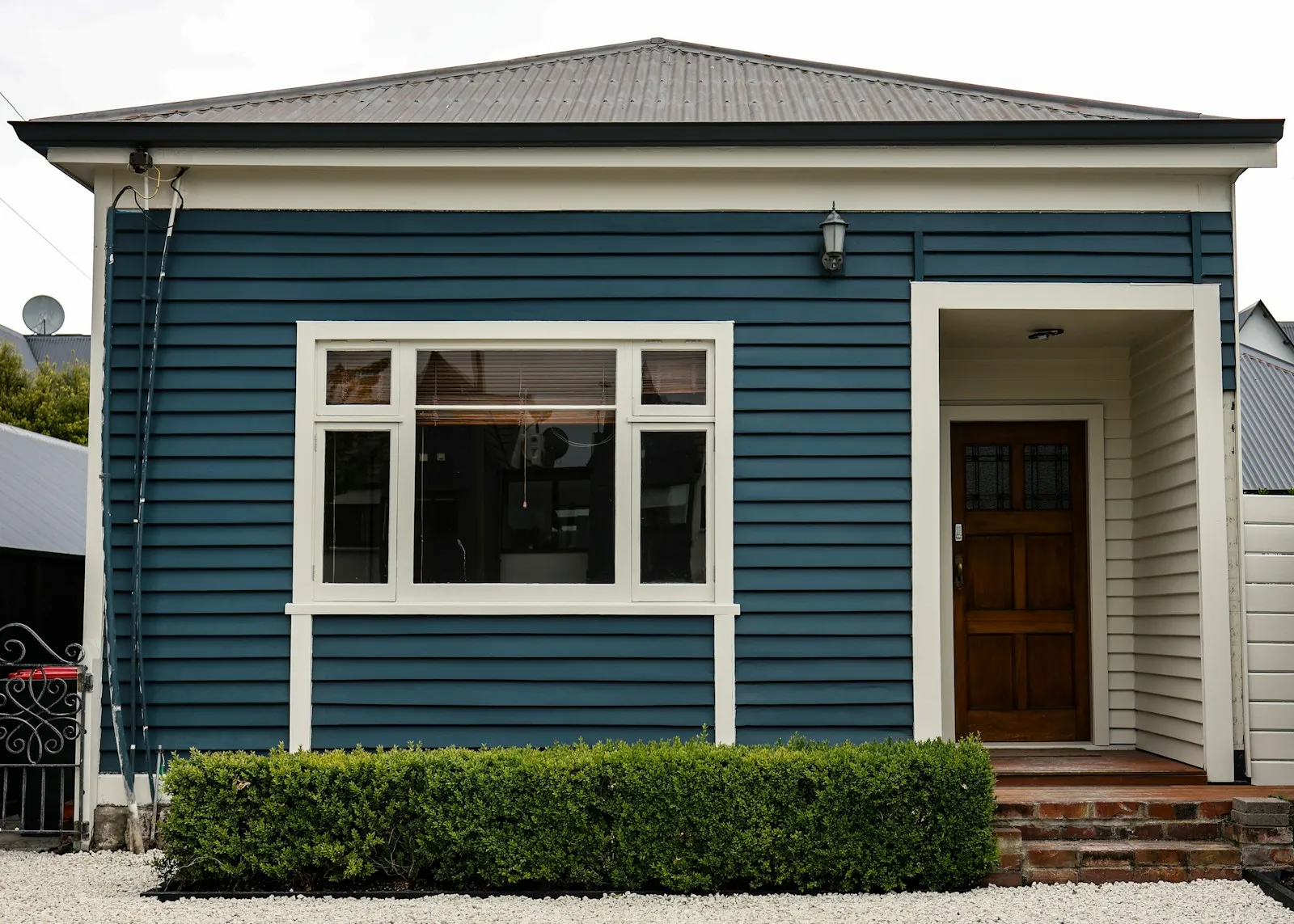
Cedar weatherboards can be painted or stained. Cedar contains natural oils and tannins that can bleed through some paints and stain a light colour, so painters use a primer suited to cedar before the topcoats. Cedar that has been stained for years can usually be painted once it is cleaned and primed correctly, but going back from paint to stain is much harder.
Western red cedar is the cedar most often used for New Zealand weatherboards. If your cedar is currently stained and you are unsure whether to paint it, ask the painter to look at the boards first. Stain soaked deep into weathered cedar sometimes needs a specific primer.
Painting plaster
Plaster painting means repainting a plastered exterior wall. The painter washes it, rakes out and fills cracks with a flexible filler, seals any repairs, then puts on two coats of a paint made for masonry or for that plaster system. Many modern plaster claddings have a maker's recommended paint system, which keeps any warranty on the cladding valid.
Plaster homes from the 1990s and 2000s can have weathertightness issues that a painter can't fix. If you see soft areas, swelling or stains around windows, ask a builder or surveyor to look before you repaint.
Whether to paint brick
Paint brick only if you are sure. Natural brick needs very little care, and a wash every few years keeps it looking good. Painted brick needs repainting every several years, and removing paint from brick is hard work. If the bricks are tired, mismatched or have old patches, painting can lift the whole house. If they are sound and you like the colour, a clean is usually the better choice.
Leave the brick natural when
- The bricks are sound and evenly coloured
- You want the lowest upkeep
- A wash brings it back
- The house has heritage character
Paint the brick when
- Bricks are patched or mismatched
- You want a lighter, modern look
- Other parts are already painted
- You accept repainting every several years
Spray painting brick
Spraying suits brick well, because the paint gets into the mortar joints and the rough face of the brick quickly. Windows, roofs, paths and plants have to be masked, and many painters back-roll the sprayed paint while it is wet to work it into the surface. Calm weather matters, because overspray drifts on the wind.
FAQs
Can you paint a brick house white?
Yes. White and off-white are the most popular colours for painted brick. The brick is washed and left to dry, any cracked mortar is repaired, then a masonry sealer or primer and two coats go on. White shows dirt more, so expect to wash it more often than natural brick.
What colours suit weatherboard villas?
Traditional villas often look best with a light body colour, a contrasting trim on the fretwork and window frames, and a darker front door. Resene advises care with dark colours on old painted timber, because they hold heat. See colour ideas for North Shore homes for schemes by house style.
How long does paint last on plaster?
Paint on plaster often lasts as long as paint on timber, sometimes longer, if cracks are repaired and the right paint is used. Coastal and sunny walls wear faster. Washing the plaster every year or two removes mould and salt, which helps the coating last.
Is it cheaper to paint brick or weatherboard?
Brick usually costs less to prepare, because there is no sanding or rot to fix, but it takes more paint and the first coat soaks in. Weatherboards need more preparation, especially on heritage homes with lead paint. The surface condition matters more than the type, so ask for a quote on the house itself.